
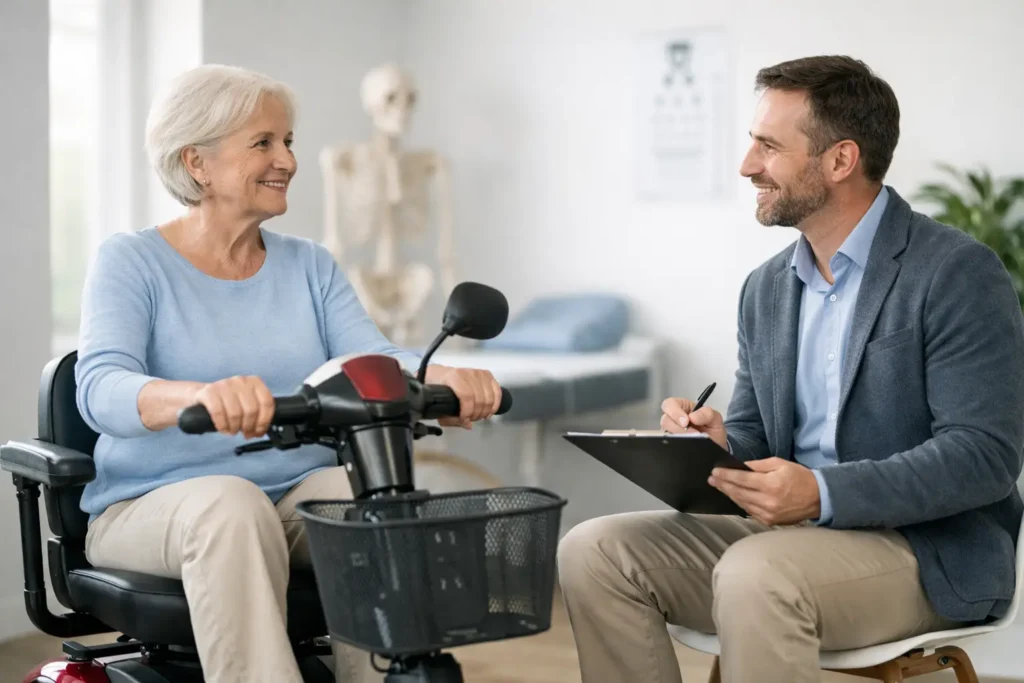
A mobility scooter can make everyday life easier, but choosing one should never be based on convenience alone. An assessment for mobility scooter use helps match the person, the scooter, and the places it will be used, so daily travel is safer, more practical, and more comfortable.
For many older adults and people living with reduced mobility, the question is not simply whether a scooter is useful. The real question is whether it suits their health needs, balance, vision, strength, and daily routine. A scooter that is too large, too fast, or too difficult to control can create problems instead of solving them.
Why an assessment for mobility scooter use matters
Mobility scooters are often seen as a straightforward purchase. In reality, they are part of a person’s wider mobility plan. Someone may struggle with walking long distances but still have enough balance and reaction time to operate a scooter safely. Another person may find a scooter appealing, yet be better supported by a wheelchair, walking aid, physiotherapy, or a combination of measures.
That is why an assessment matters. It looks at more than the device itself. It considers the person’s medical condition, physical ability, home layout, transport needs, and the distances they usually travel. This kind of review can help prevent avoidable falls, traffic risks in shared spaces, and costly purchases that do not meet the user’s needs.
It also gives families peace of mind. Loved ones are often concerned about safety, especially if the user has poor eyesight, slower judgement, dizziness, weak hand grip, or memory problems. A proper assessment brings those concerns into a structured conversation.
Who may need a mobility scooter assessment?
An assessment for mobility scooter use may be helpful for people who tire easily when walking, have joint pain, reduced lower limb strength, or chronic medical conditions that limit endurance. This can include older adults with osteoarthritis, stroke survivors, people with neurological conditions, and those with heart or lung disease whose mobility has changed over time.
It may also be useful if someone has already started using a scooter but is finding it difficult to steer, transfer on and off, or manage slopes and crowded areas. In those situations, the issue may not be the scooter alone. It could point to changes in health that should be reviewed.
A short medical consultation can be a sensible first step, especially when there are questions about fitness, safety, or whether another mobility aid may be more appropriate.
What happens during an assessment for mobility scooter suitability?
The exact process varies, but a good assessment usually starts with understanding the person rather than the equipment. A clinician or trained assessor will ask about current mobility, medical history, recent falls, medications, and what everyday tasks are becoming difficult.
They may ask simple but important questions. Can the person sit upright for a period of time without discomfort? Can they turn their head to check surroundings? Are their hands strong enough to control handlebars or controls? Do they feel breathless after short activity? Have they had episodes of fainting, blackouts, or confusion?
These details matter because scooter use involves more than sitting and moving forward. It requires awareness, judgement, hand control, visual attention, and the ability to get on and off safely.
Physical function and safety checks
The physical part of the assessment often looks at strength, flexibility, coordination, and balance. Transfer ability is especially important. If a person cannot safely move from standing to sitting, or from the scooter back to standing, the scooter may become a fall risk.
Hand function is another key area. Some people have arthritis, tremor, neuropathy, or weakness that makes steering difficult. Others may have shoulder or neck stiffness, which can affect their ability to check for hazards around them.
Vision should not be overlooked. Reduced eyesight can make it harder to judge distance, notice kerbs, or avoid pedestrians. If there are concerns about blurred vision or untreated eye conditions, those should be reviewed as part of wider preventive care.
Medical review
An assessment may include a review of long-term conditions and medication. This is important because dizziness, drowsiness, poor blood sugar control, and blood pressure fluctuations can all affect safe scooter use.
For example, someone with diabetes may also have reduced sensation in the feet or visual changes. A person with heart disease may become fatigued unexpectedly. Someone with cognitive decline may struggle with safe decision-making in public spaces. None of this automatically rules out scooter use, but it changes what kind of support and precautions may be needed.
Lifestyle and environment
A scooter has to fit real life. That includes where it will be parked, whether there is step-free access, how narrow the home entrance is, and whether lifts, pavements, or shared corridors can accommodate it.
An assessor may also ask where the scooter will be used most often. Short trips to nearby shops are different from frequent travel across busy public spaces. A person who mainly needs help for market visits may need something compact and easy to manoeuvre. Someone planning longer outdoor journeys may prioritise stability and battery range. There is no single best model for everyone.
When a scooter may not be the best option
Sometimes the most helpful outcome of an assessment for mobility scooter use is recognising that a different solution would be safer. This can be disappointing at first, but it is often the more practical decision.
If a person has severe balance problems, repeated falls during transfers, poor judgement, or significant visual impairment, a scooter may increase risk. In other cases, the issue may be temporary. Someone recovering from surgery, a recent illness, or an acute flare of joint pain may improve with treatment and rehabilitation.
That is why the assessment should not be treated as a pass-or-fail test. It is a way to understand what support will actually improve independence.
How a GP can help
A neighbourhood GP can play a useful role when mobility changes begin to affect daily life. A consultation can help identify whether pain, breathlessness, dizziness, poor vision, medication side effects, or chronic disease are contributing to reduced mobility.
This broader medical view matters. If knee pain is limiting walking, treatment may improve function enough that scooter use becomes occasional rather than essential. If fatigue is caused by poorly controlled diabetes, anaemia, or heart problems, addressing the root cause may improve mobility and safety. If falls have become more common, that needs proper evaluation rather than a quick equipment purchase.
For patients who are managing several long-term conditions, continuity of care is especially valuable. A familiar primary care clinic can review the whole picture, including chronic disease follow-up, medication checks, preventive screening, and practical next steps.
Preparing for your assessment
It helps to arrive with a clear picture of daily difficulties. Think about how far you can walk comfortably, whether you have had any recent falls, and what situations are hardest – uneven ground, longer outings, standing in queues, or moving around busy public areas.
If possible, bring details of current medications and any relevant medical history. Family members or caregivers can also be helpful during the discussion, especially if they have noticed changes in memory, stamina, or confidence when outdoors.
Being honest is important. Some people minimise symptoms because they want a quick solution. Others feel embarrassed about slowing down. A good assessment is not about taking independence away. It is about finding the safest and most suitable way to support it.
A practical, patient-first approach
In primary care, mobility is rarely just about one device. It is linked to pain control, falls prevention, chronic disease management, home safety, and confidence in daily routines. That is why an assessment for mobility scooter use is best approached as part of overall health planning, not a standalone transaction.
For some patients, a scooter opens the door to more independence, social activity, and less strain during day-to-day tasks. For others, the assessment highlights treatable health issues or suggests a better alternative. Both outcomes are useful.
At Healthcare United Toa Payoh Clinic, we believe mobility decisions should be guided by safety, practicality, and the person’s wider health needs. If walking has become harder, or if you are unsure whether a scooter is suitable, a proper medical review can help you move forward with more confidence.
The right support is not always the quickest option, but it is often the one that helps you stay active, safe, and comfortable for longer.